“The best way to reach people outside the game is for the people inside it to engage with them when the time is right. We need to do better to explain golf, and why it’s good for society.” – Forrest Richardson
Introducing “The Sustainable Sport” Book
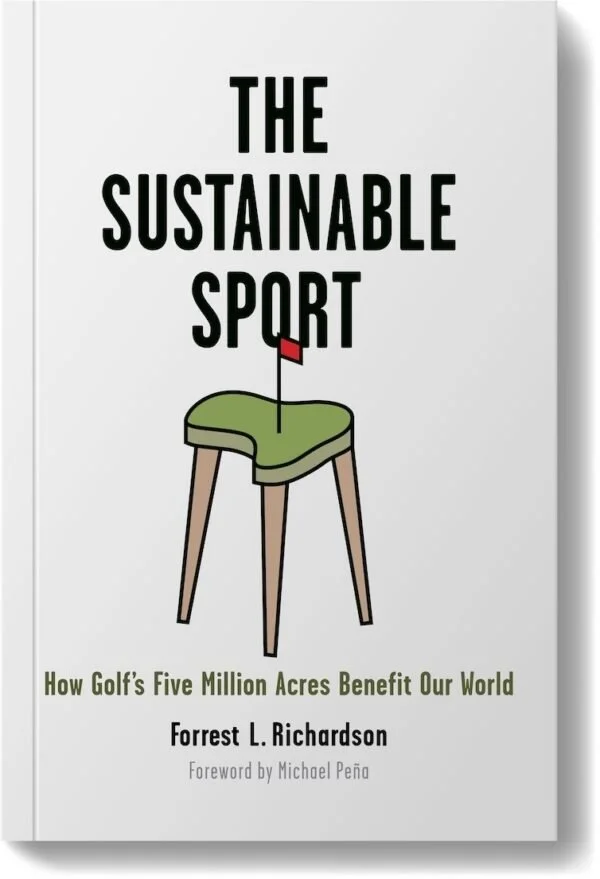
In early November 2026, golf course architect Forrest Richardson and I had the chance to sit down and chat about his latest book The Sustainable Sport: How Golf's Five Million Acres Benefit Our World.
My personal journey with sustainable golf consciously began during my Sustainable Innovation MBA program at the University of Vermont in 2019. Once I had learned about regenerative methodologies, I was inspired to know how land management can address global health, so I set out to combine my passion for golf with regenerative business. I curiously discovered key industry figures on the scale of golf, including its 38,000+ golf courses and 5.2 million acres.
My travels to Scotland, along with my subsequent role with the National Golf Foundation, led me to deeper understandings about my purpose and mission, golf’s purpose, and how the “sustainable sport” has changed lives in golf’s nearly 600 years of being. That journey continues to unfold today (six and a half years after co-founding Driving the Green), and it is an honor to connect with varied industry perspectives on the great work golf is doing, along with how it can continuously improve.
Golf course architect Forrest Richardson discusses the benefits of golf along environmental, economic, and social fronts, making his case for why it remains such an enduring (and thus “sustainable”) sport. We also discuss how golf’s five million acres vary in environmental performance – as in, not all golf courses (nor all acres of a golf course) are made equal. Those premises lay a foundation for the importance of designers and builders to further naturalize golf courses while integrating natural beauty, ecological function, and of course, playability for paying golfers.
Fun fact from the book: the acreage of naturalized acres on golf courses throughout the US (that is, natural land on any US golf course not including turf, clubhouse, parking, and other actively maintained areas) comprises a collective land area roughly equal to Yosemite National Park!
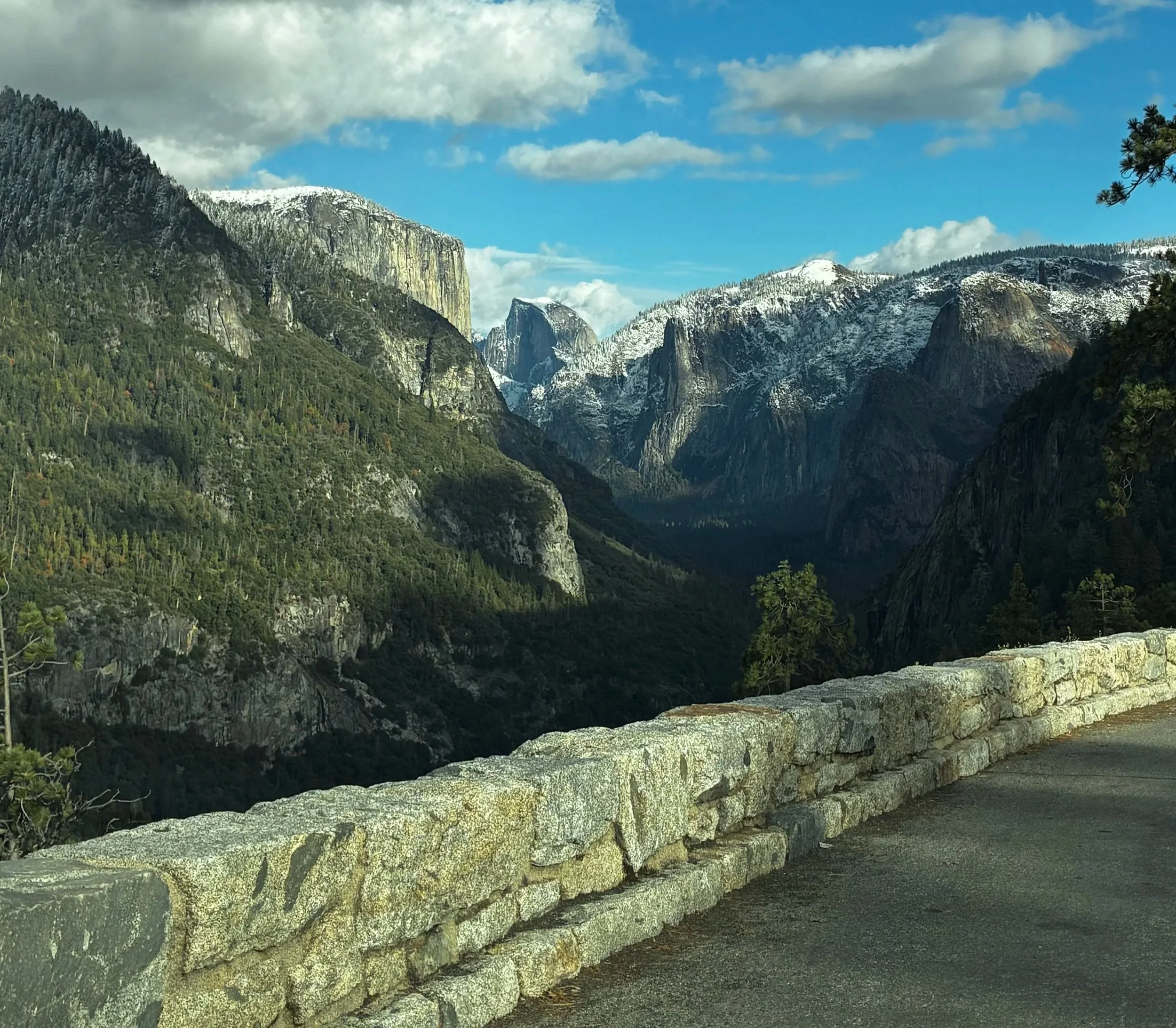
Yosemite National Park’s famous “Tunnel View”, recently taken from Wawona Road with my iPhone
Forrest wrote The Sustainable Sport: How Golf's Five Million Acres Benefit Our World to give everyone in golf a plain-language playbook for understanding and defending the game. In our recorded conversation about the book (outlined below), we discussed golf's footprint along with where the game goes next.
For more info, check out the website: The Sustainable Sport
Answers have been condensed and edited for clarity. Enjoy!
Interview Topics include:
· Defining sustainable golf
· Who “The Sustainable Sport” book is for
· Visionary integrated golf community concepts
· Variance in the performance (ecological, economic, and social) of golf design
· How Forrest foresees golf to evolve
· Golf’s remaining room for improvement
Defining sustainable golf
Andre Paul: "Sustainable" gets thrown around so much that I've wondered whether it's even the right term. You offer a very clear definition in the book. Has it evolved for you over time? In your new book “The Sustainable Sport”, you tell a story about a conference in Iceland.
Forrest Richardson: That's where the impetus for the book happened. Throughout my career I've heard pushback on golf: it takes up too much space, it's bad for the environment, it's a class sport played only by people at places like Augusta. That pushback has become more intense in the last decade.
At the European Institute of Golf Course Architects (EIGCA) meeting in Iceland, there was a session that set out to answer the question "What is sustainable golf?" It was very frustrating, because no one could boil it down. It felt like a lot of corporate speak, with each organization giving its own spin. I had my pen poised to write down what sustainable golf means. I thought, how can you have a room full of smart people and not put up one PowerPoint slide with the simple tenets of sustainable golf?
I left that meeting thinking it would be neat to put everything in one place. Not a white paper, but a story, or a playbook, of what sustainable golf is. It took a while because I have a day job designing golf courses. I deliberately kept it non-technical, so almost anyone in golf could read it, or parts of it, and come away with ideas they could evangelize and use to help set the record straight.
Who “The Sustainable Sport” book is for
Andre Paul: Who did you have in mind as the core audience for the book?
Forrest Richardson: Anyone who loves golf or makes their living in golf. I didn't write it for the naysayers. I didn't think it was fruitful to aim it at people who already have a negative perception, or someone writing a blog post somewhere. The best way to reach people outside the game is for the people inside it to engage with them when the time is right. We need to do better to explain golf, and why it’s good for society.
For a while I had a dream that the American Society of Golf Course Architects might have a team of five or six members who acted like first responders. When someone wrote something terrible about golf, that rapid response team would go into action and set the record straight. It was too complicated to get done.
So I wrote for the people connected to the game: those who make equipment or golf shoes, and those who run, manage, maintain, design or build courses. I wanted everything in one place and easy to understand. This way, at a cocktail party, on an airplane, or at Thanksgiving dinner — when someone pushes back on golf, you can say, "Wait a minute. Before you take that premise, did you know this?"
Are all golf acres equal?
Andre Paul: Doing economic impact studies for Colorado and Oregon at the National Golf Foundation, I saw how big golf's social and economic footprint is. I grew up in Vermont and studied sustainability, so I've had to reconcile my tree-hugging with my love of golf. The game occupies about 5.2 million acres, the figure in your subtitle. You point out that golf's natural areas, combined, are about the size of Yosemite. So, are all golf acres equal? What's the range of environmental performance, and how do we move more courses into the higher range without sacrificing the social benefits and quality of the game?
Forrest Richardson: It's a fair question. No category of anything in our built environment is equal, and golf is no exception. Some buildings are LEED-certified and very efficient, and others, not so much. Some airports are beautiful and efficient, with sensitive materials; others, not so much.
Golf courses vary in the same way. Some are very old, some were built in the '80s, and some are modern creations built with a different approach to wetlands and the land. In the 1960s and ‘70s when we were just building, building, building, and not always on land that made sense, we did things different than we do today. Golf is a canvas of open air and open space, and that has fundamental value. A course built in the '60s without great infrastructure, root zones, irrigation or drainage is still open space, and it's still productive. Is it as good as a modern day course with newer approaches, of course not. Thankfully we are continually re-building older courses. In the process, we make them better environmentally.
We have an opportunity to make golf's five million acres better, and we have been. The greatest renaissance in the history of golf architecture has been the rebuilding of post-World War II courses. They all need new irrigation, root-zone improvement, better drainage and tree management. When they're rebuilt, you see wetlands expanded or created, turf reduced, and trees and plants chosen to be compatible with the location. This wasn’t at the forefront in the '60s, '70s and '80s. Everything we’ve renovated or rebuilt in golf in the last 30 or 40 years has gone in the right direction. We’ve been busy making golf better.
Take Baylands Golf Links in Palo Alto, California, the old Palo Alto Municipal course. In the 1950s they planted eucalyptus and what I call "shopping center trees" that had no relevance to San Francisco Bay. When we re-built the course, we made the wetlands bigger, managed the trees to fit to the Bay. We found ways to bring more amphibians to the wetlands and we connected the wetlands to the ecosystem of the Bay. Before, those connections did not exist. Now, when the bay's tide rises, there's a real connection between the bay and the golf course.
Infrastructure is another huge one. We used to install steel pipe, then concrete pipe, then transite pipe, then PVC in the '50s and '60s. Today the common pipe on golf courses is HDPE plastic, which lasts 100 years or more. Add the shift to organic fertilizers and use of more organic turf management, and everything is heading in the right direction.
To answer you directly: a course that gets a C-minus environmentally today can easily be bumped to a B or an A when it needs work. Compare that with an airport, a building or a car dealership. Those are very heavy lifts, and the only way to really improve them is to move them, close them, or tear them down and rebuild. That takes its toll on the environment. When you rebuild a golf course, you're not replacing everything; the environment stays. Maybe that's the biggest takeaway: on a golf course, we're not covering the land with a roof or asphalt. It remains part of the open space. Best of all, we’re making golf courses better as we learn.
Soleri, Arcosanti and the integrated golf community
Andre Paul: A phrase in the book I resonate with is “golf as ecological infrastructure”, especially compared with the alternatives, like a building or an airport. We know from regenerative agriculture that well-managed land can be more productive than unmanaged land. That brings me to more visionary thinking. You mention Paolo Soleri and Arcosanti in Arizona, his vision of fully integrating people and nature, and a golf concept you presented with him that was never built. Why haven't fully integrated ecological golf communities taken root?
Forrest Richardson: I grew up near Soleri's compound and would ride my bike over to learn about architecture and look at the scale models. When he started Arcosanti, our paths crossed. I talked to him about golf and he was very warm to the idea. I wasn't paid anything, but I spent a month or more on the concept because I thought it could have traction.
Arcosanti is about an hour north of where I'm sitting. It never got finished and might never be finished. It's an idea, most of all. That’s its value; people have learned a great deal from it. Part of Soleri's dream died when he died. Golf would have been great, but without Paolo the idea diminished.
In a way, golf has already done these things, just in a different spirit. What Paolo and I envisioned wasn’t new; it was just a perfect fit for his city of the future. Desmond Muirhead, the great land planner and golf course architect, is by all accounts the father of the modern golf community. He integrated golf similar to the way Paolo and I envisioned. Muirfield Village in Ohio is Muirhead’s greatest example. Jack Nicklaus gets credit as the golf course architect, but when Muirhead was brought in to work with him in the '70s, it was Muirhead's vision to make the golf course the Central Park of the community. It was laid out around the natural creeks and valleys, with homes, trails, roads and common spaces all integrated. Is that Arcosanti? Not verbatim, but it is a living, breathing community with golf as its central focus. The golf makes Muirfield Village better. And vice versa.
Muirhead did the same at McCormick Ranch here in Arizona and at Desert Island in the Palm Springs area: trails, social spaces, resorts, homes, community centers, the golf club and the tennis center all integrated. It's not taken quite as far as Soleri would have taken it, but it's the same principle.
At McCormick Ranch and Gainey Ranch, not far from me, water treated from the sewage system at on-site plants irrigates the golf courses. That's the entire concept. The 36 holes at McCormick Ranch, with their lakes and reservoirs, served as a floodway. The course slows the water's velocity before it spills over and continues downstream, protecting homes and property values both within McCormick Ranch and below it.
Golf's best models
Andre Paul: That utopian vision still sets a bar to aspire toward. In your own terms of sustainable and enduring, what are the best examples of golf today?
Forrest Richardson: The temptation is to point to remote, hard-to-reach destination properties and call that the new golf. They're beautiful open space, don't get me wrong, but they're a small percentage of courses worldwide, and most are surrounded by hundreds of thousands of acres of open space that isn't the golf course. I don't think you can pick one course as the perfect example.
The fact is that golf courses are open space serving as parks, with purposes and values that go well beyond parks, including economic ones. A golf course employs people and generates revenue. Courses are mini factories, resorts, food and beverage operations and social hubs. Think of all the people employed because of one golf course; its tentacles are huge.
It boils down to a simple concept: golf courses are parks, but with dimensions that are very unique as open space. No other open space is as rich in its reach. Dog parks are parks, but have their own set of issues. It sounds great: open space, people socializing with their dogs. Then you look at the nitrates that build up in the soil until they become toxic dumps. And as my friend Ed Sadalla, the environmental psychologist, says, there are no birds in dog parks! I'm still waiting to hear a greater example in our built environment other than the open space of golf course.
As for the future, I think golf's contribution will be smaller spaces that are just as productive in their reach and their value to people.
The change that Forrest hopes the book brings
Andre Paul: What's the greatest change you hope to see in the world as a result of this book? Knowing your core audience is people in and around golf makes that question even more interesting to me now.
Forrest Richardson: Thinking of golf in different ways. It isn't one size fits all. I hope the book reinforces that all of us in golf, whether we make equipment, operate or build clubs, or just play, should think about how golf can be enjoyed in places that aren't 150 acres or more. Golf is already moving in that direction.
I'm not saying we get rid of golf in that more typical regulation-length facility; there will always be value in that. What I see is more indoor golf concepts, entertainment ranges, miniature golf, non-standard courses that aren't 18 holes, short courses, par-3 courses and new formats we have not even thought of yet. I have a dream that someday there could be a golf ball that doesn't hurt people, break windows or carry liability. Think of what we could do if you could experience the sport in a tighter space without having to worry so much about errant balls and separating holes as much.
Golf keeps improving. What we put on golf courses is becoming much more inert. We're starting to manage courses the way we cook in our kitchens, with things that are more organic, more natural and not detrimental. This movement will continue.
The really good part is that more people are playing golf than ever before, and that's sustainable in its own way. It proves the 600-year-old sport isn't going anywhere. Golf will go through cycles, as it always has, but we now have more dimensions for playing it. Artificial turf, love it or hate it, is going to get better, and the environmental pushback on it will get resolved because it has to. Golf doesn't have to be played on grass. Within half a mile of where I'm sitting, there could be 100 or more garages and houses with indoor simulators, people holding clubs and experiencing the thrill of golf in front of a screen.
So my hope is that golf keeps improving. If there's one common theme, it's for people in the game to think, "Just because we've always done it that way doesn't mean we have to do it that way in the future."
Room for improvement, and the chemicals question
Andre Paul: You've described the many ways golf has improved. Where does it have the most room for improvement environmentally? I hope for a world where golf courses don't need chemicals, or where the only ones used are truly, provably non-toxic. You make good points in the book: courses are businesses, they aren't applying chemicals willy-nilly, and they aren't trying to poison the environment, as opponents often portray. Are there gaps in what we know about chemicals on golf courses, and in how that's communicated to the public?
Forrest Richardson: Many of the products applied to golf courses are inert, natural compounds meant to support plant health, not toxic substances. A key driver of sustainability is new drought-tolerant turfgrass varieties, which naturally reduce the need for fungicides and for heavy water use. The move to electric maintenance equipment helps too, but the industry still has to deal with life-cycle issues like battery disposal and recycling, much as Tesla has to with its cars. There aren’t “perfect” solutions in the built environment, and it’s important that “perfect” doesn’t become the enemy of “better.”